
OVER DE VOORSTELLING
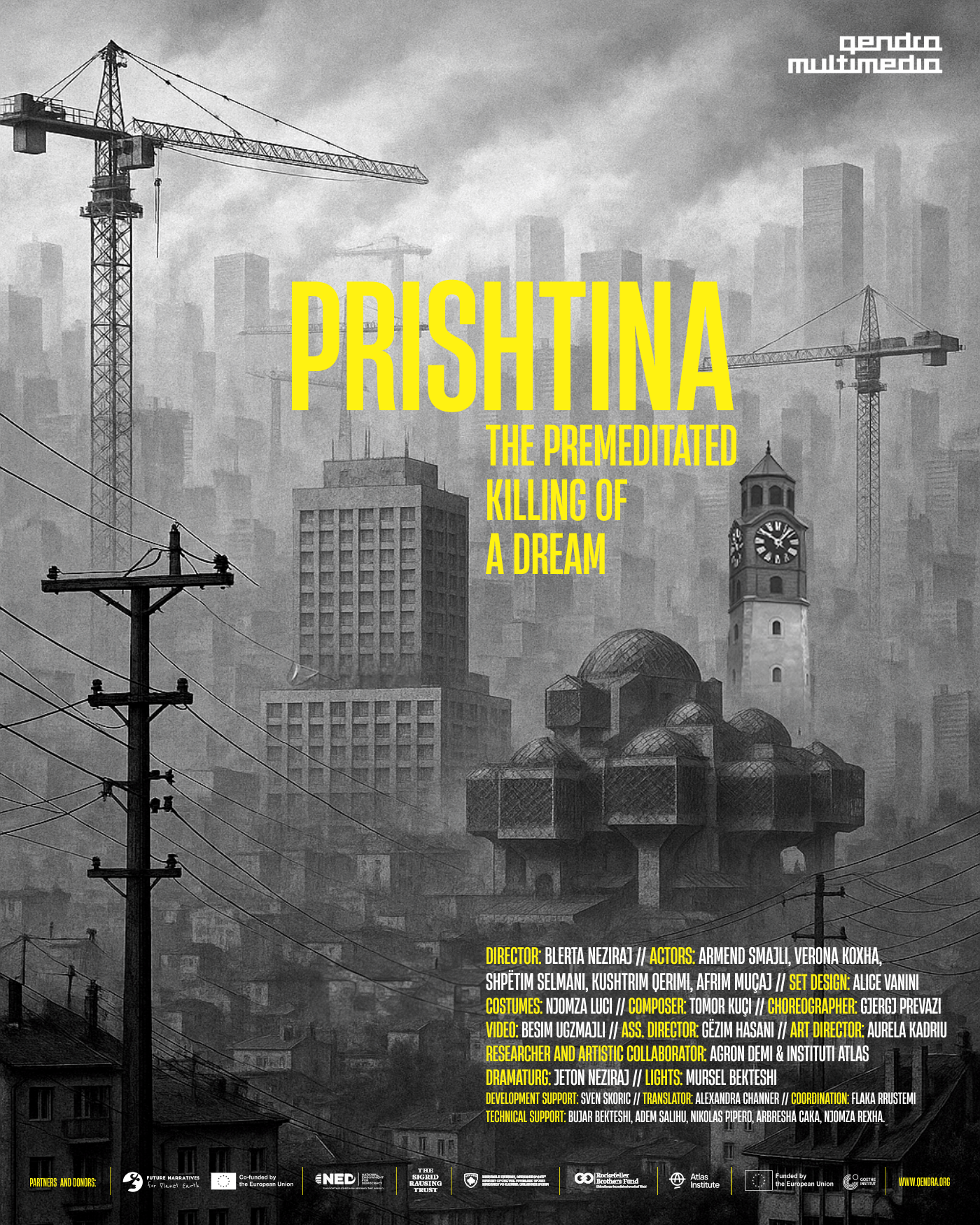
Het vertrekpunt van dit stuk is het verhaal van een misdaad die 25 jaar eerder plaatsvond, in een recent bevrijd Prishtina, dat toen werd bestuurd door de VN-missie in Kosovo.
Volgens niet-officiële gegevens werd meer dan zestig procent van de Albanese dorpen in Kosovo tijdens de oorlog door het Servische leger en de politie verbrand en vernield. Toen de oorlog in juni 1999 eindigde, was onderdak daarom een van de meest dringende problemen voor de meerderheid van de bevolking. De administratie van de Verenigde Naties had geen snelle oplossing voor dit probleem. Maar er werd een ‘oplossing’ aangeboden door mensen uit het criminele milieu, zakenlieden en bouwfirma’s, die zich haastten om dit ‘vruchtbare terrein’ voor persoonlijk gewin uit te buiten.
Een door oorlog getraumatiseerde samenleving, die heroïsch probeerde het leven weer op te bouwen, werd ongewild ondergeschikt aan deze schimmige groep die een huisvestings‘oplossing’ bood. Prishtina begon te groeien, met gebouwen die als paddenstoelen uit de grond schoten, slecht gebouwd en zonder enig stedenbouwkundig plan of naleving van bouwcriteria. Parken veranderden in bouwplaatsen; publieke ruimtes werden ingeperkt door nieuwe gebouwen. Kleine huizen werden afgebroken en op hun plaats verrezen wolkenkrabbers.
In die tijd probeerde Rexhep Luci, architect en hoofd ruimtelijke ordening van Prishtina, vrijwel in zijn eentje om opnieuw controle te krijgen over het urbanisme. Maar dat was geen tijd voor mensen die aan de toekomst dachten. Rexhep Luci werd meerdere keren bedreigd door figuren uit het criminele milieu en op 11 september 2000 werd hij door een onbekende aanvaller gedood in de inkomhal van zijn appartement in Prishtina.
Rexhep Luci is als Ibsens Dr. Stockmann. Behalve dat hij voor zijn waarheid over Prishtina een veel hogere prijs betaalde.
Vandaag heeft het probleem van illegale bouw in Prishtina en Kosovo catastrofale proporties aangenomen. Bouwactiviteiten zonder plan of controle hebben onze steden verstikkend gemaakt, en publieke ruimtes onveilig en onaangenaam. PRISHTINA. The Premeditated Killing of a Dream brengt deze kwesties op scène en nodigt ons uit om opnieuw na te denken over onze relatie met — en verantwoordelijkheid voor — de stad, in een tijd waarin deze vernietigende cyclus geïnstitutionaliseerd en genormaliseerd is geraakt.
In de 25 jaar sinds het einde van de oorlog is de stad Prishtina veranderd in één grote bouwplaats — misschien wel de grootste ter wereld. Een parallelle, spookachtige stad torent erbovenuit, een bedreiging voor het leven en voor de toekomst.
Gebaseerd op het stuk "In Five Seasons: An Enemy of the People" van Jeton Neziraj.
ABOUT THE PLAY
The starting point of this play is the story of a crime, which happened 25 years before, in a recently liberated Prishtina, which was then administered by the United Nations Mission in Kosovo.
According to unofficial data, over sixty percent of Albanian villages in Kosovo were burned and destroyed by the Serb army and police during the war. Therefore, when the war ended in June 1999, shelter was one of the most pressing issues for the majority of people. The United Nations Administration had no swift solution to this problem. But a ‘solution’ was offered by people from the underworld, businessmen and construction firms, who rushed to exploit this ‘fruitful terrain’ for personal profit.
A society traumatized by the war, and in an epic struggle to restore life, unwillingly became subordinate to this shadowy group that offered a housing ‘solution’. Prishtina started to grow, with buildings planted overnight, of poor construction quality, and without any kind of urban plan, or observance of building criteria. Parks were turned into construction sites; public spaces were shrunk by buildings. Small houses were demolished, and on their site, skyscrapers were planted.
At that time, and almost alone, Rexhep Luci, architect and Pristina’s head of spatial planning, tried to establish urbanism controls. But that was not a time of people who thought about the future. Rexhep Luci was threatened a number of times by people from the underworld and then, on 11 September 2000, he was killed by an unknown assailant inside the entrance to his apartment in Prishtina.
Rexhep Luci is like Ibsen’s Dr. Stockmann. Except that for his truth about Prishtina, he paid a much higher price.
Today, the issue of illegal construction in Prishtina and in Kosovo has taken on catastrophic dimensions. Construction, without plan or control, has made our cities suffocating, and public spaces unsafe and unfriendly. “PRISHTINA. The Premeditated Killing of a Dream” address these issues on stage and invites us to rethink our relationship with, and responsibility for the city, at a time when this destructive cycle has become institutionalized and normalized.
In the 25 years since the end of the war, the city of Prishtina has transformed into a large construction site – perhaps the biggest site on the planet. A parallel, ghost city, looms over it, a threat to life and the future.
*Based on the play "In Five Seasons: An Enemy of the People" by Jeton Neziraj.


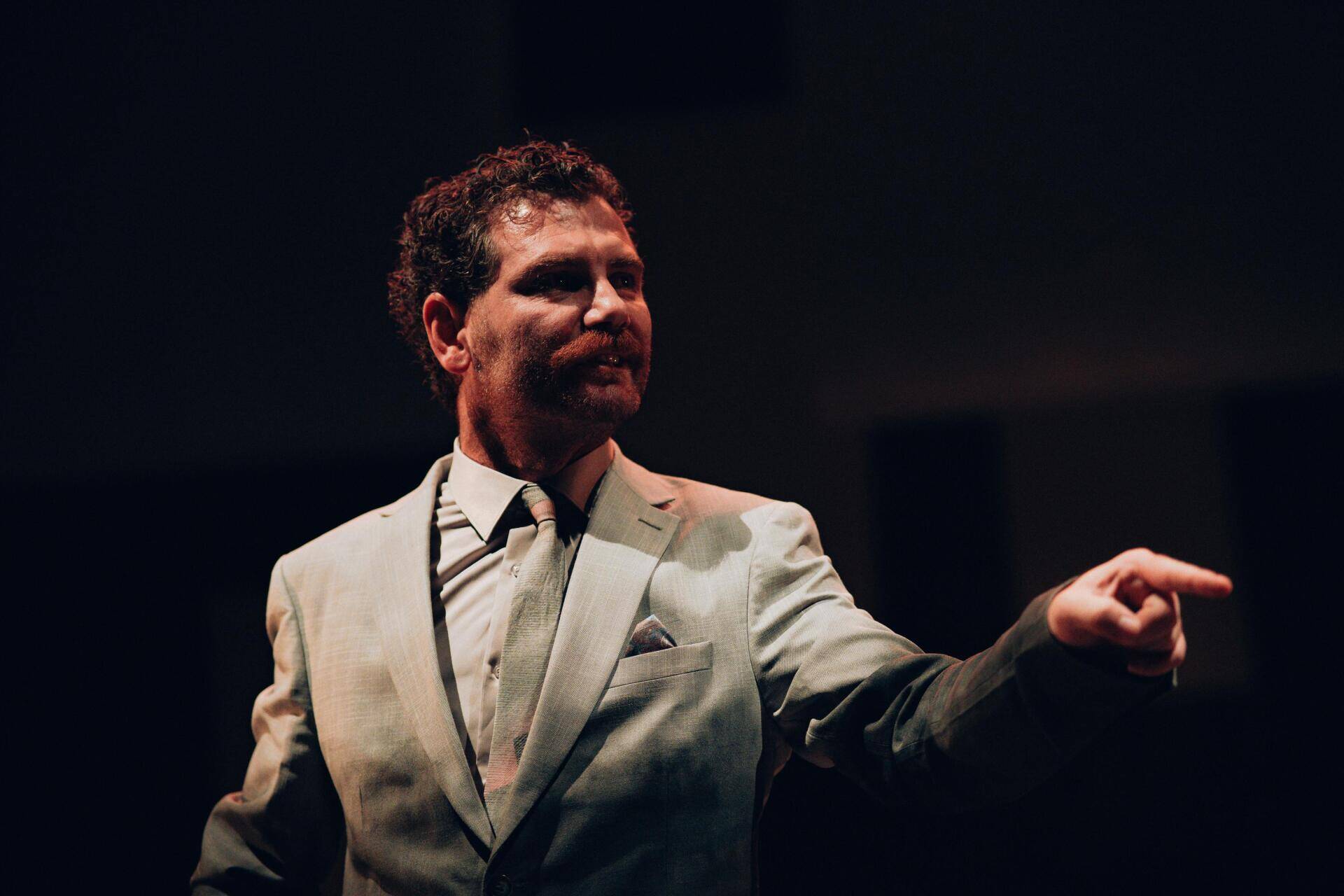



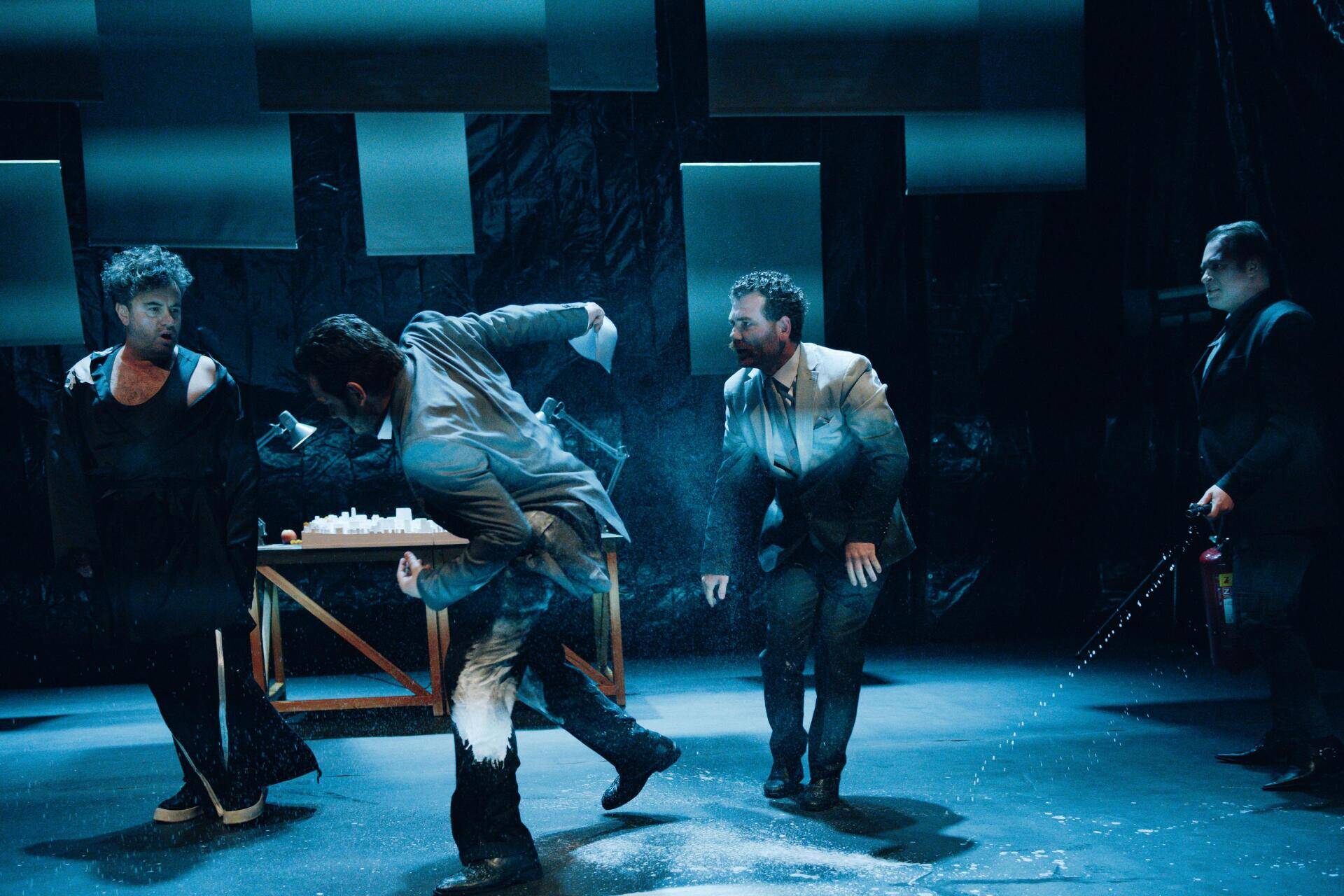
PRISHTINA. The Premeditated Killing of a Dream - foto Noar Krasniqi
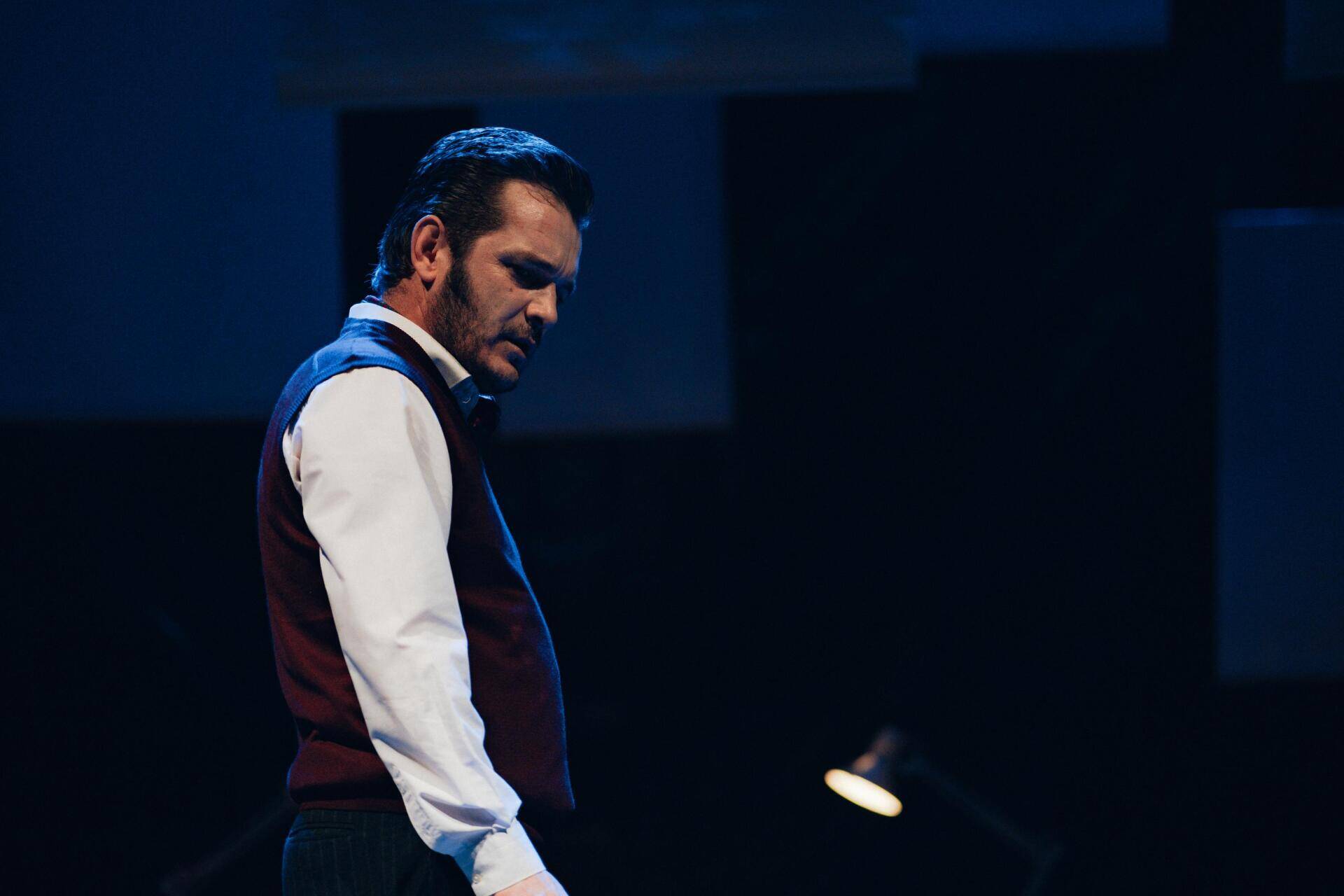
PRISHTINA. The Premeditated Killing of a Dream - foto Noar Krasniqi
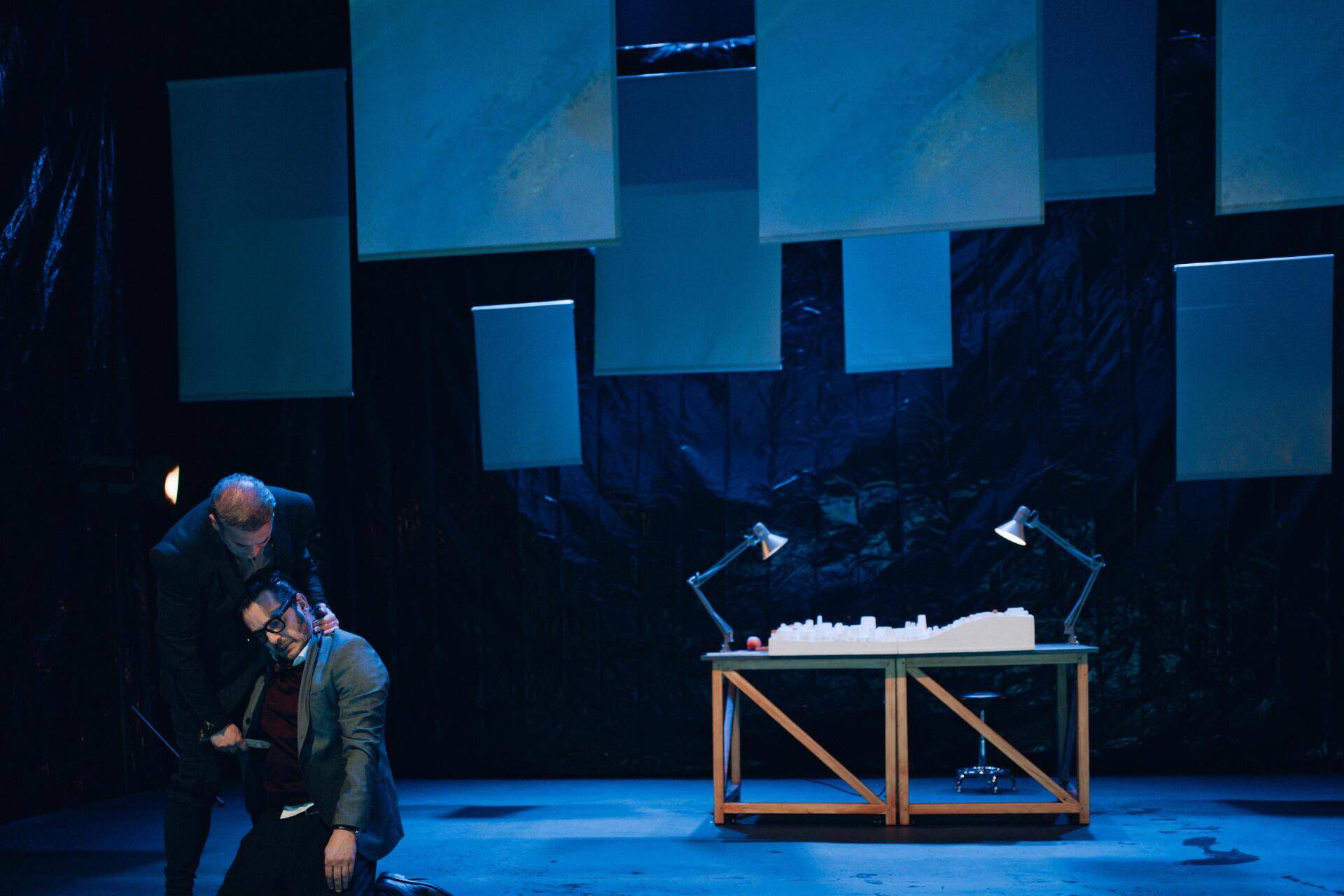
PRISHTINA. The Premeditated Killing of a Dream - foto Noar Krasniqi
PRISHTINA. The Premeditated Killing of a Dream - foto Noar Krasniqi
PRISHTINA. The Premeditated Killing of a Dream - foto Noar Krasniqi
PRISHTINA. The Premeditated Killing of a Dream - foto Noar Krasniqi
PRISHTINA. The Premeditated Killing of a Dream - foto Noar Krasniqi
PRISHTINA. The Premeditated Killing of a Dream - foto Noar Krasniqi
PRISHTINA. The Premeditated Killing of a Dream - foto Noar Krasniqi
PRISHTINA. The Premeditated Killing of a Dream - foto Noar Krasniqi
PRISHTINA. The Premeditated Killing of a Dream - foto Noar Krasniqi
PRISHTINA. The Premeditated Killing of a Dream - foto Noar Krasniqi
PRISHTINA. The Premeditated Killing of a Dream - foto Noar Krasniqi
PRISHTINA. The Premeditated Killing of a Dream - foto Noar Krasniqi
PRISHTINA. The Premeditated Killing of a Dream - foto Noar Krasniqi
PRISHTINA. The Premeditated Killing of a Dream - foto Noar Krasniqi
PRISHTINA. The Premeditated Killing of a Dream - foto Noar Krasniqi
PRISHTINA. The Premeditated Killing of a Dream - foto Noar Krasniqi
PRISHTINA. The Premeditated Killing of a Dream - foto Noar Krasniqi
PRISHTINA. The Premeditated Killing of a Dream - foto Noar Krasniqi
PRISHTINA. The Premeditated Killing of a Dream - foto Noar Krasniqi
PRISHTINA. The Premeditated Killing of a Dream - foto Noar Krasniqi
PRISHTINA. The Premeditated Killing of a Dream - foto Noar Krasniqi